
Specialist Spinal Injury Live-In and Home Care Services
We understand that living with a spinal cord injury can be challenging. That’s why we’re here to provide personalised spinal home care services to help you or your loved one maintain independence, manage daily life safely, and achieve the best possible quality of life. We also provide expert spinal care in our care and nursing homes.
Contact Us:

A spinal cord injury is a serious condition that affects the nerves in the spinal cord, impacting movement, sensation, and bodily functions below the site of the injury. It is not an illness or a sign of weakness. Each spinal cord injury is unique, with varying levels of severity and effects on daily life, mobility, and independence.

We understand that living with a spinal cord injury, or supporting a loved one with the condition, can bring both challenges and adjustments. Through our specialist spinal cord injury care and support services, we provide personalised assistance that focuses on promoting independence, confidence, and well-being.
Our experienced care professionals offer flexible support through live-in care, home care, and our care and nursing homes. We adapt our approach to each person’s individual needs, triggers, and routines to provide reassurance, comfort, and consistency.
If your needs change or become more complex, we are fully equipped to adjust the level and type of support to suit your circumstances, ensuring that you or your loved one continues to live safely, confidently, and with dignity and respect.

What is Spinal Cord Injury care?
Spinal cord injury care provides personalised support for people living with spinal cord injuries, helping them to maintain independence, manage daily activities, and live safely and confidently. Because every person’s injury and experience is unique, the level and type of support is tailored to each individual’s physical, emotional, and mobility needs.
Our spinal cord injury care services are designed to promote safety, independence, and quality of life. Depending on your needs, care may include 24-hour live-in support for ongoing assistance, regular home care visits for daily support, or tailored care within one of our care and nursing homes.
From mobility assistance and personal care to emotional support and companionship, we adapt our approach to ensure comfort, dignity, and consistency at every stage of life.

Our spinal cord injury care services
Our spinal cord injury care services are designed to provide the best care for people living with a spinal cord injury, built entirely around each person’s unique needs, preferences, and goals. We create personalised care plans that focus on mobility, independence, and quality of life, ensuring you or your loved one receives the right level of support at every stage of recovery and daily living.





Specialist spinal cord injury care
Our specialist spinal cord injury care supports people with a wide range of needs, including those with partial or complete paralysis, co-occurring health conditions, mobility challenges, or additional personal care requirements. Our private spinal injury carers offer personalised care either at home or in our nursing and care homes. Every care plan is tailored to the individual’s medical, physical, and emotional needs to ensure the best outcomes, independence, and quality of life.
Local Authority and NHS Partnerships
Agincare works closely with local authorities and the NHS to help people access the right level of support for spinal cord injuries and related needs. We partner with over 60 local authorities and NHS trusts across England, providing fully managed, tailored care packages. These partnerships ensure continuity of care, allowing individuals to access expert support in the community and benefit from a structured, safe environment with the right interventions and ongoing assistance.
Nursing care for spinal cord injury patients
We provide expert nursing care as part of our specialist spinal cord injury services, supporting clients with complex medical, personal, and mobility needs. Our spinal cord injury carers deliver personalised care including health monitoring, medication management, support with daily living, and assistance with mobility, transfers, or other physical challenges, helping clients to live safely, comfortably, and as independently as possible.

Meet Cher – Our Clinical Lead
Cher has enjoyed a long and varied career in health and social care across Europe and the UK. A registered nurse, she set up her own domiciliary care service in Monaco, later expanding it into France, supporting people with complex care needs. Before joining Agincare in April 2023, Cher worked for the DWP in disability analysis and as a Mental Function Champion. Cher oversees the clinical aspects of our live-in care service, including quality assurance, technical competency, and training.

Callum’s Story
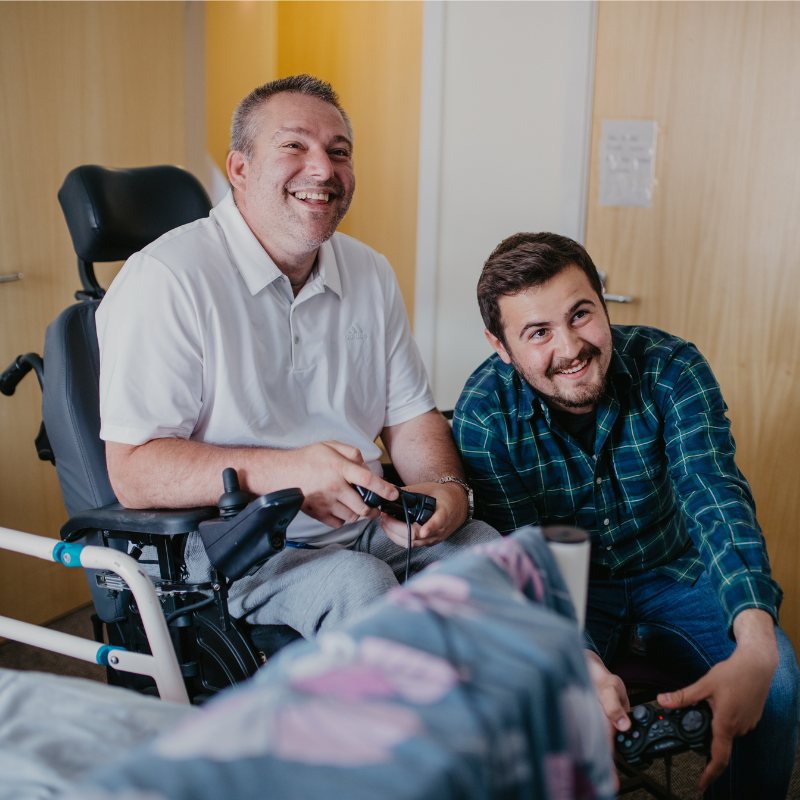
Unfortunately, at age 16, while having fun with friends, Callum fell 30 feet. He sustained trauma to his head, memory loss and an acquired spinal cord injury. Callum spent the next two years in hospital. With his mobility declining and behavior becoming challenging, Callum’s social worker decided to research live-in care.
Hope was nearly lost when it became clear many companies weren’t able to support his needs. Thankfully, Callum found hope again. Agincare was assessed to be the best suited to support Callum. With great care, we matched him with Pawel, his new live-in care worker, who immediately began tailored training and getting to know Callum.
Soon, Callum was ready to move back home. The move was emotional, but Pawel was there for him. With Pawel’s support, Callum began a new chapter.

Costs of spinal cord injury care services
The cost of spinal cord injury care varies depending on the type of service, level of support, and complexity of individual needs. Understanding spinal cord injury support costs can help you plan and choose the right care for yourself or your loved one.
Our live-in care for spinal cord injuries starts from £1,135 per week, with transparent pricing and tailored quotes based on individual needs. Our experienced care advisors can guide you on paying for spinal cord injury care and help you explore funding options to ensure the right support is in place.
Already receiving spinal cord injury care and support? You could be paying more than you need to. Find out quickly with our Cost Savings Calculator, a simple tool that helps you compare your current care costs and see how much you could save with Agincare.

CQC information
When you are looking for information, be sure to visit the Care Quality Commission’s website. The CQC monitors and inspects care services and publish what they find to help you find the best care.
Funding
At Agincare, we work closely with individuals, local authorities, case managers and solicitors to ensure you receive the right funding and support for your needs. Our experienced team can guide you through available options, including local authority funding, NHS continuing healthcare and privately funded care, helping you make informed decisions with confidence and transparency.
Why choose Agincare’s spinal cord injury care services?
Our spinal cord injury services are trusted by thousands of families, local authorities across the country, and the NHS to deliver reliable, high-quality care. Our bespoke, fully-managed service is regulated by the CQC and rated ‘Good’.

One of the largest independent care providers in England, with decades of specialist care experience

Family-owned care provider established in 1986

Rated excellent on Trustpilot

Fully managed care provider

24/7 updates on your package of care via our app

Fully trained live-in care workers directly employed by us

Immediate and emergency starts available

Tailored support for varying levels of need, including specialist nurse-led care for complex conditions

Dedicated care supervisor to oversee your care

No lengthy contracts or exit fees – flexible, transparent support

Offer a range of services including live-in care, home care and care homes

All of our care workers are English-speaking and enhanced DBS checked
Reviews of our services

How to arrange spinal cord injury care
Getting started with spinal cord injury care is simple and obligation free. Our step‑by‑step process makes arranging support straightforward and stress free:
Our expert team is here to guide you through every step with compassion and clarity, and there is no obligation to proceed.

Spinal cord injury FAQs
A spinal cord injury is damage to the bundle of nerves and nerve fibers that sends and receives signals from the brain. The spinal cord extends from the lower part of the brain down through the lower back.
Spinal cord injury can be caused by direct injury to the spinal cord itself or from damage to the tissue and bones (vertebrae) that surround the spinal cord. This damage can cause temporary or permanent changes in feeling, movement, strength, and body functions below the site of injury.
Spinal cord injury can be described as complete or incomplete.
An incomplete injury means the spinal cord is still able to send some messages to or from the brain. People with incomplete injuries still have some feeling, function, and muscle control below the site of their injury.
A complete injury means that there is no nerve communication below the injury site; muscle control, feeling, or function below the injury is lost.
All our care and support team complete the nationally recognised care certificate. Specific client needs-led training is taught by internal and external trainers and/or healthcare professionals.
Each person will have their own unique experience following a spinal cord injury which is tailored to their individual care plan. We will regularly assess your care plan to reflect any changing care needs or requirements. We can adjust your care plan include 24-hour live-in support for ongoing assistance, regular home care visits for daily support, or tailored care within one of our care and nursing homes.
One of our trained assessors will visit you in your home for a free, no-obligation assessment of your spinal cord injury at a time and date that suits you. By fully understanding everything about you, together we can create a bespoke spinal injury care plan and choose the best spinal cord injury care worker for you. We will continually review your care and support needs with you, to make sure you’re getting exactly the care you need.
A traumatic spinal cord injury is caused by a sudden external force, such as a car accident, fall, or sports injury. An acquired spinal cord injury can result from internal factors, such as infections, diseases, or medical conditions, and occurs after birth. Both types can affect mobility and function, but the causes and treatment approaches may differ.