

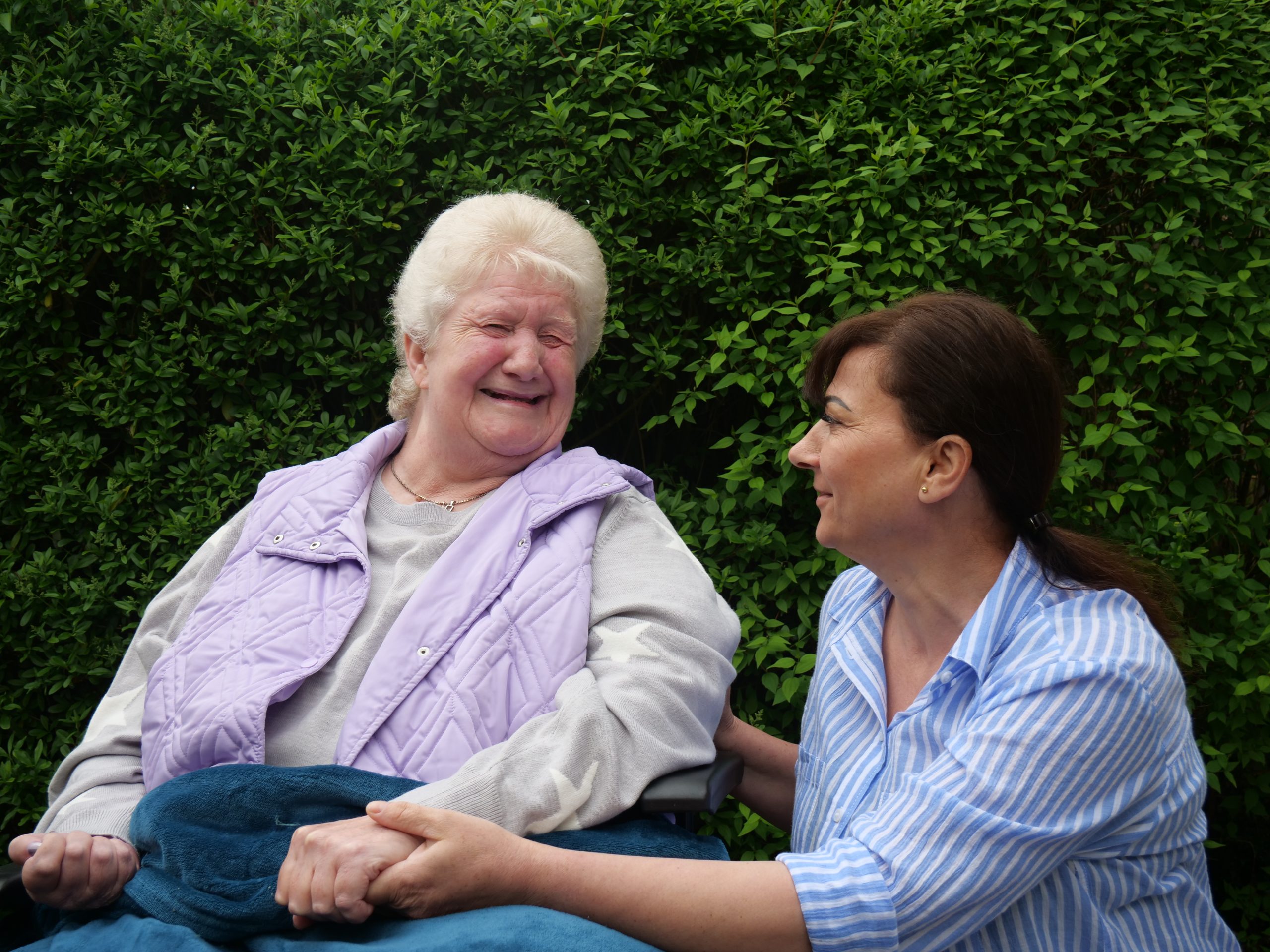
At Agincare, we provide specialist Alzheimer’s care services that support people at every stage of the condition to live safely and meaningfully in familiar surroundings.
Our care can benefit people living with Alzheimer’s who want to remain in their own home, whether they are in the early stages and need gentle prompting, reassurance, or companionship, or in the middle stages and require support with daily routines, personal care, meals, hydration, medication prompts, or mobility.
We also support people in the later stages of Alzheimer’s who need 24-hour supervision or live-in care, as well as those experiencing memory loss, confusion, disorientation, night-time waking, or increased risk such as falls or wandering.
Our services are suitable for individuals and couples who wish to continue living together at home, for families caring for a loved one who need respite or additional support, and people being discharged from hospital who require safe, specialist care at home. For many, our Alzheimer’s care offers a personalised, one-to-one alternative to residential care.
Specialist Alzheimer’s home carers
Our trained Alzheimer’s home care workers provide personalised support through both home care visits and live-in care, helping people feel safe, supported and understood. Every person receives an agreed care plan shaped around their routines, preferences and health needs, ensuring consistency and familiarity.
Our care workers work in partnership with each individual’s wider care team, including GPs, nurses and family members, to deliver coordinated, responsive support.
Care plans are regularly reviewed and can adapt as needs change, whether that means increasing visit times, introducing specialist support, or transitioning to live-in care. This flexible approach ensures care remains appropriate, compassionate and centred on dignity at every stage.


What is Alzheimer’s care?
Alzheimer’s care is specialist support designed to help people living with Alzheimer’s maintain independence, safety and quality of life as their needs change over time. Care can be provided through home care, live-in care or where required, within care or nursing homes.
Care workers offer practical assistance with daily tasks such as personal care, meals, medication prompts, mobility and household routines, alongside emotional reassurance and companionship. Structured routines and familiar surroundings help reduce confusion, anxiety and distress, while one-to-one support ensures care is tailored to the individual.
Alzheimer’s care at home allows many people to remain close to family, friends, pets and their community, with professional support in place to adapt as the condition progresses.

How live-in and home carers manage Alzheimer’s symptoms
Alzheimer’s can affect memory, communication, behaviour and physical ability, often making everyday life more challenging over time. Professional care workers provide care that adapts to each person’s symptoms, helping them remain safe, comfortable and supported in familiar surroundings.
Through home care for Alzheimer’s dementia or live-in care, support is delivered consistently by trained care workers who understand how symptoms change. Familiar routines, clear communication and one-to-one attention help reduce distress and build confidence, while flexible care plans ensure support increases as needs evolve. This personalised approach is central to compassionate Alzheimer’s elderly care, providing reassurance for both individuals and their families.
Common symptoms include:
- Memory loss and forgetfulness
- Confusion about time or place
- Difficulty completing tasks
- Changes in mood or behavior
- Communication challenges
- Reduced mobility
- Night-time restlessness
Care workers offer gentle reminders for meals, medication and routines, calm reassurance during moments of confusion or anxiety and practical support with personal care and household tasks.





24-hour live-in care for Alzheimer’s
Live-in care for Alzheimer’s provides continuous one-to-one support for people who need reassurance and supervision throughout the day and night. By receiving 24-hour care at home, individuals can remain in familiar surroundings while benefiting from consistent, personalised support.
Alzheimer’s live-in care is particularly suited to people who need round-the-clock supervision to remain safe, experience night-time waking or confusion, or require regular help with personal care, medication, continence, or mobility. It can also support those at increased risk of falls or incidents, or anyone who wishes to avoid moving into a care home.
With a dedicated care worker living in the home, routines are maintained, anxiety is reduced and care adapts as needs change. This form of care offers families reassurance that support is always available, making it a trusted and compassionate alternative to residential care.
A typical day with an Alzheimer’s live-in carer
Each day is shaped around familiar routines, preferences and abilities. In the morning, the care worker gently supports waking at a comfortable time, assisting with washing, dressing and personal care at the individual’s pace. Medication support is provided, followed by breakfast and encouragement to stay hydrated, alongside reassurance and orientation to the day ahead.
During the day, care workers support meals, snacks and drinks, help with hobbies, gentle exercise, or reminiscence and provide companionship and emotional reassurance. They may accompany the person to appointments or outings, assist with household tasks and respond calmly to moments of confusion or anxiety.
In the evening, carers prepare a familiar meal, support personal care and medication routines, and help create a calm environment to reduce agitation or sundowning. Overnight, the care worker remains available to offer reassurance, mobility support, or supervision if the person wakes or becomes unsettled.


Meet Cher – Our Clinical Lead
Cher has enjoyed a long and varied career in health and social care across Europe and the UK. A registered nurse, she set up her own domiciliary care service in Monaco, later expanding it into France, supporting people with complex care needs. Before joining Agincare in April 2023, Cher worked for the DWP in disability analysis and as a Mental Function Champion. Cher oversees the clinical aspects of our live-in care service, including quality assurance, technical competency, and training.

How much does Alzheimer’s home or live-in care cost?
The cost of Alzheimer’s care at home depends on the level of support needed and how care requirements change over time. With home care, you only pay for the care you receive, allowing for flexible, personalised support.
Two care visits a day, five days a week, can cost from £200 per week, making home care suitable for those who need regular assistance while remaining independent.
If you require ongoing or 24-hour support, live-in care may be more appropriate. Live-in care starts from £920 per week and can rise to £1,630 per week depending on the complexity of care required.
Agincare offers a free, easy-to-use care costs calculator so families can get an accurate estimate based on their unique needs. There are also various funding options and financial support schemes available to help manage the Alzheimer’s home care cost, ensuring families can access professional, personalised care without compromise.
By understanding the costs upfront, families can plan effectively and make informed decisions about the right level of support for their loved one.

Why choose Agincare for Alzheimer’s care?
Our Alzheimer’s service is trusted by thousands of families, local authorities nationwide and the NHS to deliver reliable, high-quality care. Our bespoke, fully-managed service is regulated by the CQC and rated ‘Good’.

One of the largest independent care providers in England, with decades of specialist care experience

Family-owned care provider established in 1986

Rated excellent on Trustpilot

Fully managed care provider

24/7 updates on your package of care via our app

Fully trained live-in care workers directly employed by us

Immediate and emergency starts available

Tailored support for varying levels of need, including specialist nurse-led care for complex conditions

Dedicated care supervisor to oversee your care

No lengthy contracts or exit fees – flexible, transparent support

Offer a range of services including live-in care, home care and care homes

All of our care workers are English-speaking and enhanced DBS checked
Reviews of our services

How to arrange Alzheimer’s care
Getting started with Alzheimer’s care is simple and obligation‑free. Our step‑by‑step process makes arranging care straightforward and stress‑free:
Our expert team is here to guide you through every step with compassion and clarity, and there is no obligation to proceed.

Alzheimer’s home and live-in care FAQs
Caregivers can provide personalised support, routines, emotional reassurance, practical help with daily tasks, and one-to-one companionship in their own home.
Not if they are at risk of confusion, wandering, or falls. Professional care workers provide supervision and safety.
Contact Agincare to discuss your needs. We arrange assessments, care plans, and specialist care worker matching.
We can often provide urgent support within 24–48 hours to ensure safety and continuity of care.
Costs depend on hours and care type. Use our cost calculator for personalised estimates and explore funding options.
Yes. Our care workers support couples in their own home while maintaining routines and shared spaces.
Staying at home reduces confusion, maintains routines, and allows personalised one-to-one support while keeping people close to family and pets.
Memory loss, confusion, changes in mood, difficulty with daily tasks, communication challenges, reduced mobility, and night-time restlessness.
No. With the right support, pets can remain part of daily life, offering companionship and routine.
Dementia is a broad term for cognitive decline, while Alzheimer’s disease is the most common form of dementia.
Alzheimer’s carers provide reassurance, support with toileting or mobility, and supervision overnight, reducing anxiety and ensuring safety.